Shuffle World Puzzle Quest
Reviews
Description
Rearranging the Stage
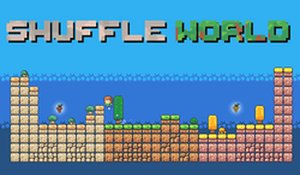
In Shuffle World Puzzle Quest, the terrain is not fixed. Each level is built from puzzle-like segments that you can select and swap. Click one segment to highlight it, then click another to exchange their positions. This rearranges the layout, opening new routes to fruits that were previously out of reach. The core challenge is spatial: you must visualize how moving a platform or a wall will change the path forward.
Collecting Fruits to Advance
Your objective in every stage is to collect all the fruits scattered across the level. Only after gathering every piece does the next stage unlock. Because some fruits sit in areas blocked by the initial arrangement, you cannot simply run and jump to them. You need to plan a sequence of swaps that brings each fruit within reach, often by creating temporary bridges or clearing obstacles. There is no time limit, so you can study the layout and experiment at your own pace.
Controls and Interaction
You move your character with the keyboard arrow keys: left, right, and jump. The level-swapping mechanic uses a mouse or touch input. Click or tap a segment to select it, then click another to swap them. This two-part control scheme keeps movement and puzzle-solving separate, so you can focus on one action at a time. The simple inputs mean new players can start quickly, while later levels demand more careful planning.
Retro Style and Family Appeal
The game uses pixel art and a retro-inspired design that recalls classic side-scrollers. Visuals are colorful and safe, with no violent or inappropriate content. Difficulty rises gradually as levels introduce more complex arrangements and require longer chains of swaps. Because there is no pressure to rush, Shuffle World Puzzle Quest suits players who enjoy thoughtful problem-solving and a nostalgic look, including younger players and families.
Compatibility
Faq
Comments
Sign in to comment
You must be logged in before posting a review or rating.
No comments yet. Be the first to comment!







Editorial Notes