Locked Room Logic: 100 Challenges
Reviews
Description
One Room, One Solution
Every room in Locked Room Logic functions as a standalone puzzle. The objective never changes: figure out how to open the door. What shifts is the method. Early rooms might ask you to spot a single hidden key or complete a simple pattern. Later rooms combine multiple clues, requiring you to hold several pieces of information at once and see how they relate. Because each room is self-contained, you never carry items or knowledge from one puzzle to the next. That structure keeps the game approachable—you can stop after any room without losing progress or forgetting a complex inventory.
How Deduction Replaces Guesswork
The design philosophy here is that every solution can be reasoned out from what is visible. There are no hidden pixel hunts, no timed sequences, and no arbitrary trial-and-error locks. If a room contains a colored dial, the clue for its setting is somewhere in that same room. This matters because it changes how you play: instead of clicking everything rapidly, you slow down and study the environment. The game rewards attention to detail and pattern recognition rather than reflexes or memorization.
Controls and Interface
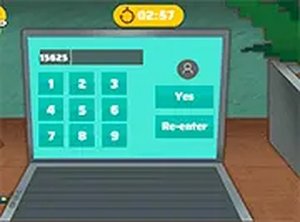
Interaction is handled with a mouse on desktop or touch input on mobile. The interface stays clean, with interactive objects highlighted visually so you know what can be examined. Clicking picks up items, checking your inventory lets you review what you carry, and using a tool on a specific part of the room triggers the next step. The controls are intuitive enough that players of any age or experience level can start without a tutorial. [IMG_1]
Progression Across 100 Rooms
Difficulty rises gradually. The first rooms establish basic mechanics—find a key, match a shape, follow a simple sequence. Mid-game puzzles start layering clues, and later rooms may require using an item in a way that is not immediately obvious. Because there are exactly 100 rooms, the game has a clear endpoint. You always know how far you have come and how much remains. The absence of time pressure means you can think through each step at your own pace, whether you have five minutes or an hour.
Compatibility
Faq
Comments
Sign in to comment
You must be logged in before posting a review or rating.
No comments yet. Be the first to comment!










Editorial Notes