Cocomelon Memory Match
Reviews
Description
How the Matching Works
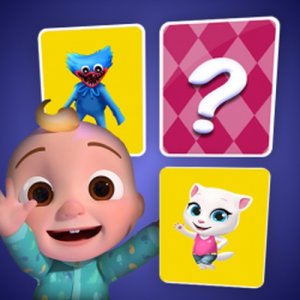
Every round begins with a grid of face-down cards, each hiding a bright Cocomelon character. Players tap or click one card to flip it, then choose a second. If the two images match, the cards stay face-up. If not, they flip back after a short pause. The goal is to reveal every pair. This turn-based rhythm gives children time to think between choices, and the immediate visual feedback—cards staying or flipping back—teaches cause and effect without any text.
Designed for Young Players
The interface is deliberately clean, with no distracting menus or reading requirements. Toddlers and preschoolers can play independently because the controls are just taps or clicks. Each round is short, so attention spans are respected, and the familiar characters create a welcoming atmosphere that encourages repeat play. Parents looking for a quick, positive screen-time activity will find that the game stays within a gentle difficulty range, avoiding frustration while still offering a mild challenge.
What Children Practice
Matching pairs exercises visual memory and pattern recognition. As children flip cards, they must recall which characters they have already seen and where. This is a foundational cognitive skill, and the game wraps it in a playful context. Because there is no timer or penalty, the pressure stays low. Success comes from attention and patience rather than speed, which makes it suitable for mixed-age family play.
Playing Together or Alone
While the game works well for solo play, an adult can join to model focus and turn-taking. Celebrating each match reinforces persistence. The content is wholesome and free of external links or ads aimed at children, so it remains a safe choice for unsupervised moments. Whether used as a quiet break or a shared activity, the game keeps its scope narrow: flip, remember, match, repeat.
Compatibility
Faq
Comments
Sign in to comment
You must be logged in before posting a review or rating.
No comments yet. Be the first to comment!








Editorial Notes